Station House
Project Description
Station House is one of the most compelling examples of how Glasgow is repurposing historic commercial buildings to support a more vibrant and sustainable city centre.
Located at 34-36 St Enoch Square, the Grade B-listed property was originally built as the headquarters of the Glasgow and South Western Railway Company and occupies a landmark position within one of the city's most strategically important locations.
Conversion of a vacant heritage ‘B Listed’ building, former 19th-century headquarters of the Glasgow and Southwestern Railway Company, into 28 affordable, mid-market rental apartments via West of Scotland Housing Association (WSHA).
Project information
Asset Class
Heritage, Living, Residential Conversion
District
St Enoch
Project Stage/ Timeline
Planning permission. Building Warrant ongoing
What worked
- Early multidisciplinary engagement: Co-ordinating with GCC Planning (planning permission/LBC) and GCC Building Standards (building warrant) from feasibility stage helped surface constraints around heritage fabric, services routes, and safety standards.
- Clear separation of consents: Treating Listed Building Consent, planning permission, and the building warrant as distinct processes reduced the risk of conflating heritage outcomes with technical compliance.
Key challenges
- Building Warrant / fire regulations: Fire strategy requirements at building warrant stage were more stringent than initially anticipated, prompting adjustments to layouts, protection to escape routes, and detailed co-ordination of services penetrations in historic fabric. This created design churn late in the process.
- Mixed ownership / operational ground floor: The first floor remained in commercial use and under separate ownership, limiting service routes and access. To decant/relocate residential services above the commercial demise, the team had to move services to the first floor. This triggered further technical co-ordination and approvals.
- Unforeseen structural cost: Relocating plant/services required the construction of a reinforced platform to support loads and achieve fire/acoustic separation—an unforeseen cost that impacted the budget and programme.
Implications for programme and risk
- Design rework risk at BW stage: Without an early, conservation sensitive fire strategy, proposals risk needing changes to planning/LBC drawings during building warrant—affecting timescales and stakeholder expectations.
- City centre logistics: Working above active ground-floor commercial space compounded access, out-of-hours work, vibration/noise controls, and just-in-time deliveries on a constrained site.
Recommendations (for future Glasgow city centre heritage conversions)
- Appoint a heritage fire engineer at planning/LBC stage: Commission a heritage experienced fire engineer (and conservation architect) before submitting planning/LBC so the fire strategy, protected routes, compartmentation, and services penetrations are embedded in the planning drawings—minimising redesign at building warrant.
- Lock in services strategy early: Map ownership boundaries and operational constraints (e.g., separately owned/occupied floors). Test services routes, loads, penetrations, and maintenance access early; allow for structural strengthening where plant is resited. Carry a contingency for platforms, secondary steel, acoustic/fire upgrades.
- Run parallel preapps: Use GCC pre-application channels with both Planning (incl. LBC) and Building Standards in parallel to reconcile conservation aims with technical compliance (fire, structure, energy/ventilation) and avoid sequential surprises.
- Agree interfaces with commercial occupiers
Put in place licence/wayleave and access protocols early with ground/first-floor commercial owners, including working hours, protection measures, and temporary service diversions. - Protect heritage fabric through method statements
Develop opening-up, service penetrations, and make-good method statements aligned to LBC conditions; specify reversible interventions where feasible.
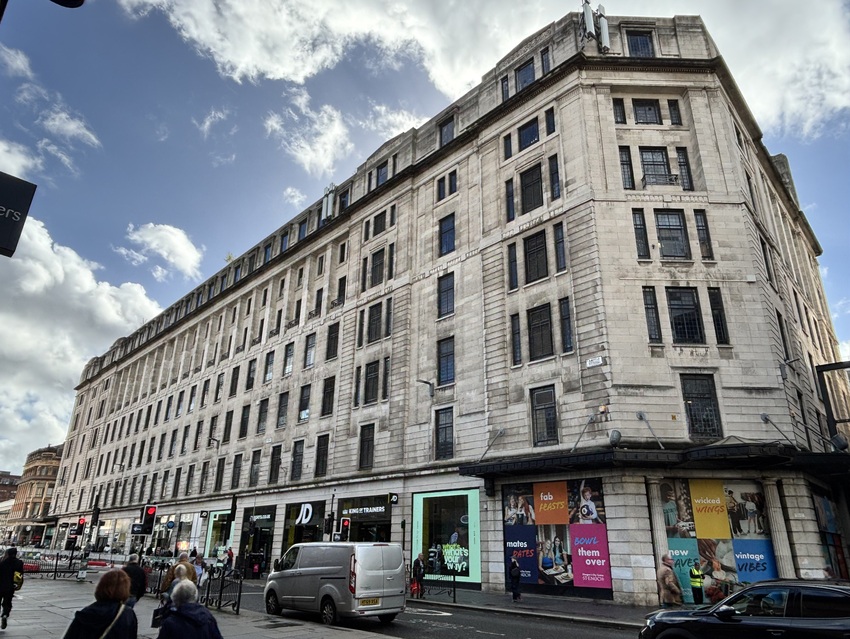
Debenhams
The former Debenhams department store on Argyle Street, represents one of the most significant city centre development opportunities in Glasgow.
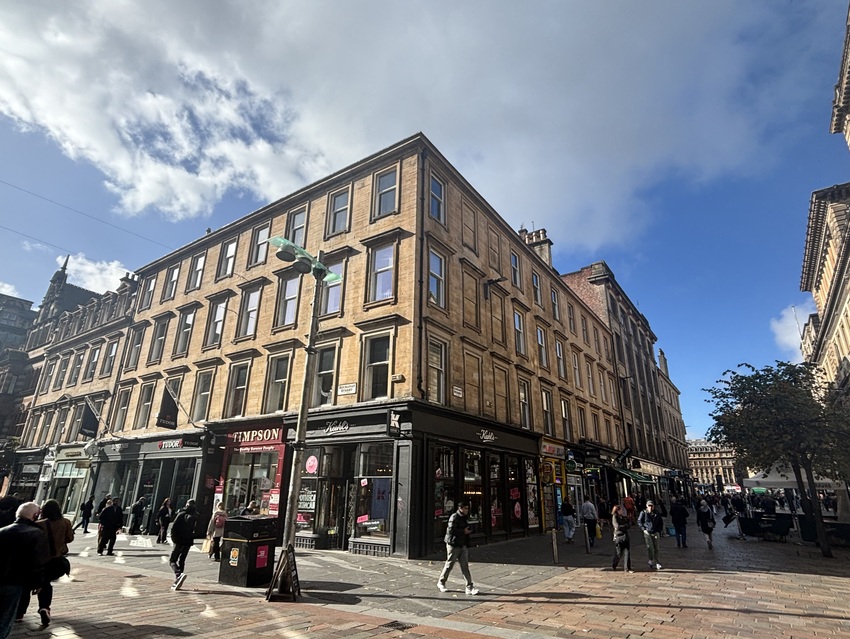
Gordon Street
A private sector heritage conversion project transforming a historic Glasgow building into 6 new residential flats, revitalising an underused upper floor asset.