

Navigating your investment
As Scotland’s largest city, Glasgow is a diverse and dynamic urban system shaped by centuries of growth, industry, culture, and regeneration. The city is governed by Glasgow City Council, working alongside regional and national partners such as the Scottish Government, Glasgow City Region, and neighbouring authorities within the wider metropolitan region.
All partners share a commitment to creating a city that works for residents, businesses, investors, and visitors—one that meets high standards of sustainability, supports economic opportunity, and protects Glasgow’s rich architectural and natural heritage.
Navigating Glasgow’s development landscape can be complex for new investors, but the Council and its regeneration and development teams offer guidance and support throughout the process. A range of tools, frameworks, and place-based strategies - such as NPF4, the City Development Plan, and the District Regeneration Frameworks (DRFs) - are in place to help steer and enable successful investment in the city.
Development guide
This is the city’s comprehensive guide for partners interested in bringing forward high-quality development within Central Glasgow.
Its purpose is to make the development journey clearer, more accessible, and more collaborative – from identifying opportunities, to shaping proposals, to delivering successful, sustainable projects on the ground. It sets out how the city works, what support is available, and how Glasgow welcomes partners who share its ambition for a vibrant, resilient urban core.
Central Glasgow is a district where heritage and innovation coexist. The city’s historic architecture and character are deeply valued, yet Glasgow embraces positive change and is committed to evolving in ways that reflect its people, its culture, and its future. As the city centre transforms – through diversification, repurposing, and new mixed-use development – Glasgow seeks partners who can contribute to this shared vision.
- Glasgow offers strong advantages for those looking to develop here. While the planning and regulatory landscape is detailed, it is transparent, stable, and well-established.
- Glasgow is Scotland’s largest urban economy and a key driver of national growth.
- Scotland provides a clear development framework through National Planning Framework 4 (NPF4), embedding sustainability and placemaking at the heart of decision-making.
- The city benefits from a robust environment for site acquisition, redevelopment, and disposals.
- Glasgow’s legal and policy systems offer predictability and stability.
Who we are
The Development Team is a dedicated group of Glasgow City Council experts here to guide you through every stage of the development process in Central Glasgow. Our aim is simple: to make your development journey as smooth, coordinated and efficient as possible.
Chaired by Mandy MacDonald, (can we link to email address: mandy.macdonald@glasgow.gov.uk) Head of Development, the team brings together specialists from across the Council, including:
- Planning
- Building Standards
- Economic Development
- Communications
- Asset Management
- Housing
- Legal Services
By bringing these disciplines around one table, the Development Team ensures early co-ordination, clearer pathways through key processes, and practical support for partners navigating development opportunities in the city centre.
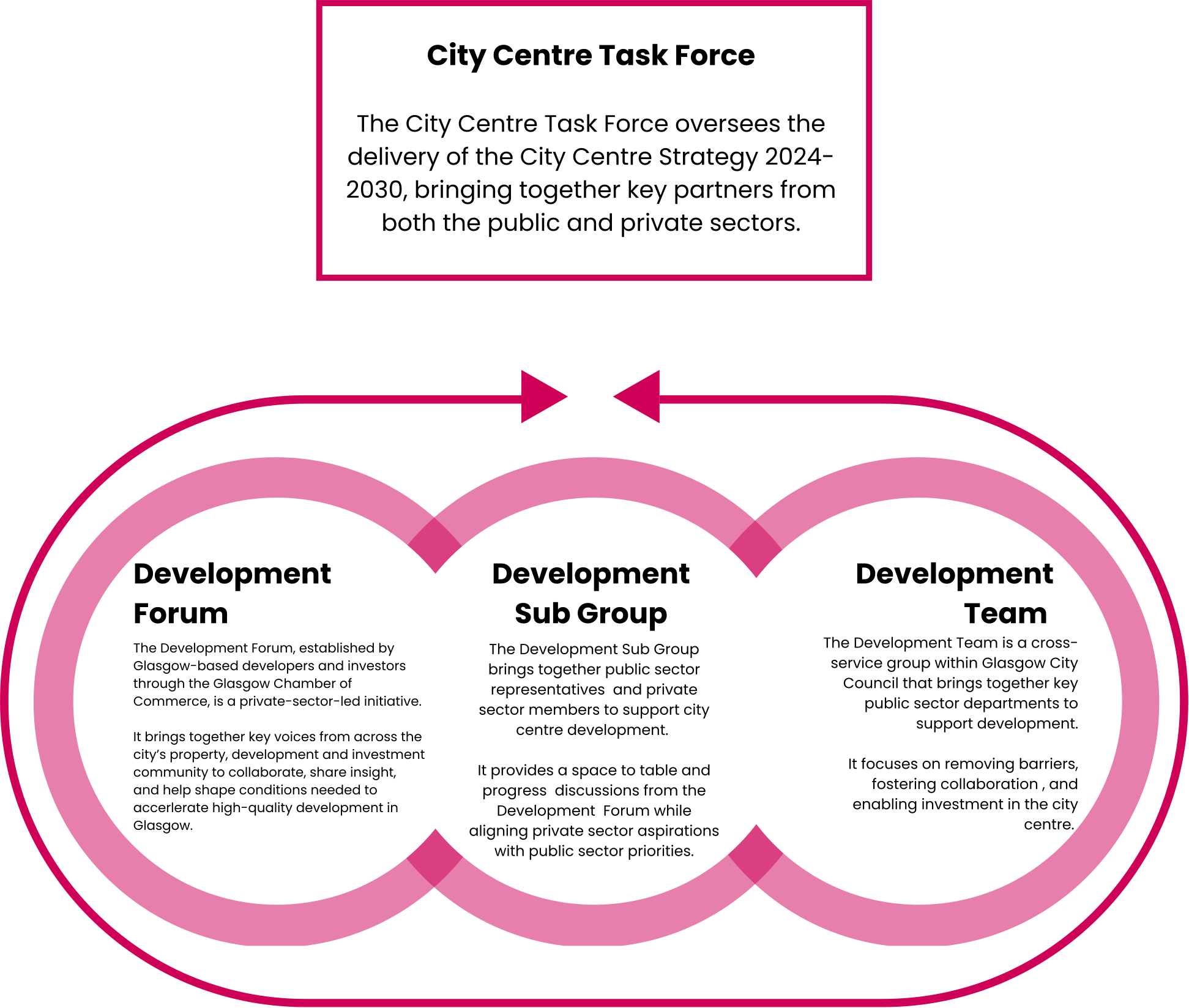
We work closely with:
The City Centre Task Force, which oversees the delivery of the 19 actions contained in the City Centre Strategy 2024-30; The Development Sub-Group, which brings together public and private sector partners to co-ordinate delivery; and The Development Forum, led by Glasgow Chamber of Commerce, ensuring ongoing dialogue with the development and business community.
Together, these groups ensure that Glasgow’s development ecosystem is aligned, responsive and focused on enabling change.
For the Development Sub-Group, please contact: Ben Wilson (ben.wilson@glasgow.gov.uk) and Bruce Patrick (bpatrick@math-re.partners).
For the Development Forum, please contact Sarah Heaney - sarah.heaney@glasgowchamberofcommerce.com).
Dedicated support
With support from Arup, Glasgow City Council has developed Develop Glasgow to provide clear, accessible guidance for navigating the city’s planning, development and regeneration landscape. This guide helps developers and landowners understand the full development journey in Central Glasgow – from identifying opportunities and shaping proposals, through to securing permissions and delivering high quality schemes on the ground.
Glasgow City Council has a dedicated Development Team in place to support your development journey across Central Glasgow.
Your Gateway to Glasgow’s Development Ecosystem
The Development Team provides a trusted, single point of contact for those looking to understand and engage with Glasgow’s development pipeline, strategic priorities and place-based opportunities.
Cross-Sector Co-ordination and Connections
We work closely with landowners, developers, investors and partner organisations to facilitate early conversations, unlock challenges, and connect you with the right expertise across planning, building standards, economic development, legal services, housing and asset management.
A Clear, Development-Ready Picture of Glasgow’s Opportunities
Through Develop Glasgow, we are assembling a clear and up-to-date picture of development opportunities across the city centre – ensuring that potential sites, ambitions and requirements are visible and well understood. This content is developed collaboratively with Council services, public agencies, the development community, and with analytical and technical support from Arup.
Together, this support helps ensure that Glasgow’s development ecosystem is accessible, co-ordinated and ready to collaborate – making it easier for you to shape and deliver successful projects that contribute to a thriving, future-focused central Glasgow.
Understanding Glasgow’s governing bodies
- In Scotland, the Scottish Government has devolved significant responsibilities to local government. In Glasgow, these responsibilities are exercised primarily through Glasgow City Council (GCC), one of Scotland’s 32 local authorities.
- Glasgow City Council provides city-wide leadership across a broad range of functions, including education, social care, housing, transport, economic development, planning, and environmental services. Political leadership is provided by the Leader of the Council, supported by an elected group of councillors representing defined wards across the city.
- The strategic direction of the city is set through Council policies, statutory plans and strategies, including the City Development Plan, Local Housing Strategy and economic and climate-related strategies.
- The Leader of the Council and elected members are supported by non-elected council officers, led by the Chief Executive, who are responsible for the operational management of the Council and the delivery of policy objectives agreed by elected members.
- Glasgow City Council is the Local Planning Authority for the city. It is responsible for preparing statutory development plans and determining planning applications within its administrative boundary. Planning decisions are taken by elected members through planning committees, supported by professional planning officers.

Entering the Glasgow Market
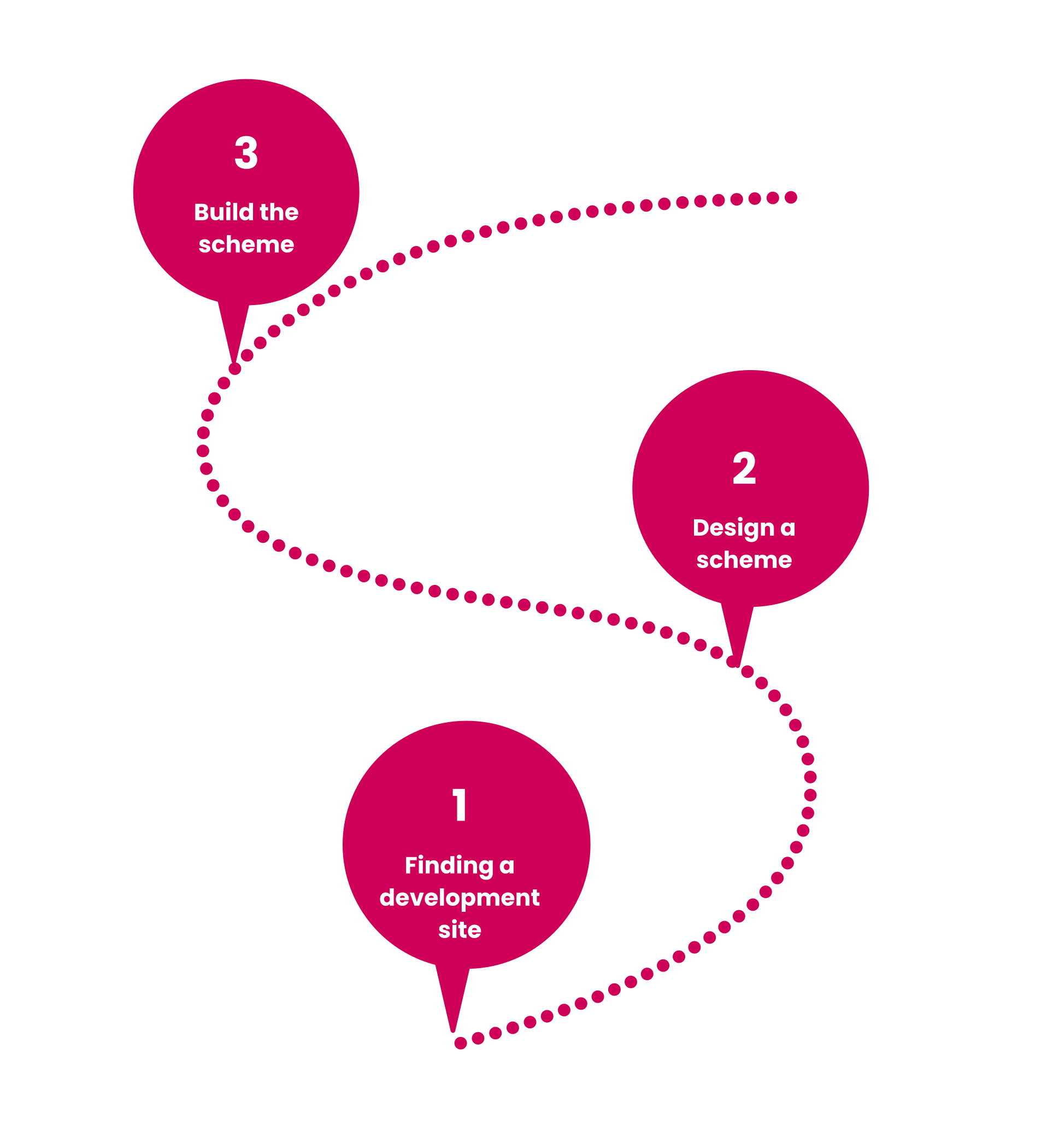
Identifying a development site for investment
In Glasgow, a tailored landscape of public bodies, organisations, tools and datasets exists to support anyone exploring development opportunities in the city. Working with a commercial agent remains the most direct way to access current opportunities coming to market.
Engaging directly with public and private sector partners can also be valuable, especially for understanding longer-term prospects in regeneration areas. Within the Council, accessing the Invest Glasgow website, and contacting the Development Team can provide a useful starting point for understanding policy direction and emerging opportunities.
These stakeholders are also helpful for identifying sites that already hold planning consent, including major applications listed on the planning portal.
Using specialist software and property databases can further support early-stage due diligence by helping identify potential sites, understand planning history, and contextualise opportunities with additional market and spatial data.
Invest glasgow
Invest Glasgow can help to put investors in touch with public and private partners to identify a development site.
Develop Glasgow
Providing support for investors and developers in Central Glasgow. Explore development opportunities, learn from development case studies, access the expertise you require in the development team.
Agents
For more support, property agents can provide ‘live’ insight into property markets.
Database
Investors wanting to identify development sites themselves, or learn more about an identified opportunity, can do so through software and databases such as CoStar.
Understanding the potential of a Development Site
There is a wide range of accessible data that can help investors understand the opportunities associated with a particular development site in Glasgow. In the early stages of due diligence, the sources below can provide useful context and baseline information.
The City Centre Performance Dashboard, maintained by Glasgow City Council, offers a broad set of datasets that provide statistical context for understanding the economic performance of the city centre. These include information on population, transport, digital infrastructure, the environment, town centre health, planning constraints, and property-related datasets. Regional datasets from the Scottish Government, the Scottish Cities Alliance, Transport Scotland, and National Records of Scotland can also help to build a wider picture of economic and demographic trends affecting Glasgow.
For more detailed insight into the planning and development landscape, the Glasgow City Council Planning Portal provides access to planning applications, decisions, and consents, enabling investors to review the planning history of individual sites. Additional market, viability and technical data can be accessed through specialist consultants where more bespoke analysis is required.
Information sources
Physical
Land Registry
Aerial Maps
OpenData
City Centre Dashboard
Legal/Regulatory
Land Registry
Building Standards
Planning
NFP4
City Development Plan
Local Policies
Who can help
Physical
Land Contamination
Consultants
Architects
Engineers and infrastructure advisors
Development Team
Legal/Regulatory
Land Registry
Building Standards
Planning
NFP4
City Development Plan
Local Policies
Making the right connections in Glasgow’s property market
Building the right relationships within Glasgow’s property and development market at the right moment is essential to the success of any project.
The landscape is shaped by a mix of publicsector bodies and privatesector organisations, each playing a distinct role at different stages of a development.
Engaging early with potential collaborators, partners, funders, enablers, consultees and consenting authorities is a key way to reduce risk. In Glasgow, understanding who you need to speak to depends heavily on the location and nature of your site, as well as the relevant material considerations—including National Planning Framework 4 (NPF4), the City Development Plan, and areabased LDFs and DRFs, particularly those covering the city centre.
Many of the most influential actors in Glasgow’s development ecosystem can be understood within these broad groups, reflecting the collaborative nature of planning and investment in the city.
Develop Glasgow
1.
Land Registry
Aerial Maps
OpenData
City Centre Dashboard
2.
Land Registry
Aerial Maps
OpenData
City Centre Dashboard
3.
Land Registry
Aerial Maps
OpenData
City Centre Dashboard
4.
Land Registry
Aerial Maps
OpenData
City Centre Dashboard
Understanding the Planning Consent Context
Scotland’s planning system is a discretionary, planled system, operating within a national framework set by National Planning Framework 4 (NPF4), adopted in 2023.
NPF4 sets out Scotland’s longterm spatial strategy and national planning policies, and forms part of the statutory development plan for every authority, including Glasgow.
Glasgow’s City Development Plan (CDP) was adopted in 2017 and provides a clear vision for land use, development priorities, and placemaking across Glasgow. It is used to guide all planning decisions on a casebycase basis, together with relevant Supplementary Guidance
Glasgow is now preparing its next plan, City Development Plan 2 (CDP2), with its Evidence Report recently passing Gatecheck, allowing work to progress toward the Proposed Plan.
The system has several benefits for investors, including:
- Greater scope for new ideas, as the system allows flexibility in decision‑making to reflect local conditions and locally sourced evidence.
- Developers can work closely with locally elected representatives and communities to build support for proposed developments.
- Policies are regularly updated, responding to changing local needs and circumstances, rather than remaining a fixed set of requirements.
Navigating planning in Glasgow
National Planning Framework 4 (NPF4)
In Scotland, the strategic spatial vision for the whole country is set out in National Planning Framework 4 (NPF4), adopted in February 2023. NPF4 forms part of the statutory development plan and sets the national spatial strategy to 2045, including national developments and policy priorities for sustainable, liveable and productive places.
NPF4 identifies national developments and regional spatial priorities that guide major longterm investment. NPF4 highlights locations with strategic potential for growth, regeneration, and infrastructure investment across regions, including the Clyde corridor and Glasgow city centre.
City Development Plan
The City Development Plan (CDP), adopted in 2017, sets out the spatial strategy for the whole city and forms the core local component of the statutory development plan alongside NPF4.
The CDP includes citywide policies and identifies areas for different types of development, supported by Supplementary Guidance which clarifies how policies should be implemented.
Strategic Development Frameworks (SDFs) and District Regeneration Frameworks (DRFs)
Several parts of the city are also shaped by Strategic Development Frameworks (SDFs) and District Regeneration Frameworks (DRFs), particularly across the city centre. These frameworks provide detailed spatial direction for key districts, guiding development priorities, urban design ambitions, and infrastructure needs.
These frameworks are material considerations in planning decisions, informing how proposals should respond to local character, regeneration aims and the City Development Plan.
Community Led Plans
Community influence is embedded through local place plans, community engagement duties, and area-based frameworks such as LDFs and DRFs. These allow communities and stakeholders to shape development priorities and help inform updates to the Local Development Plan.
Planning Hierarchy
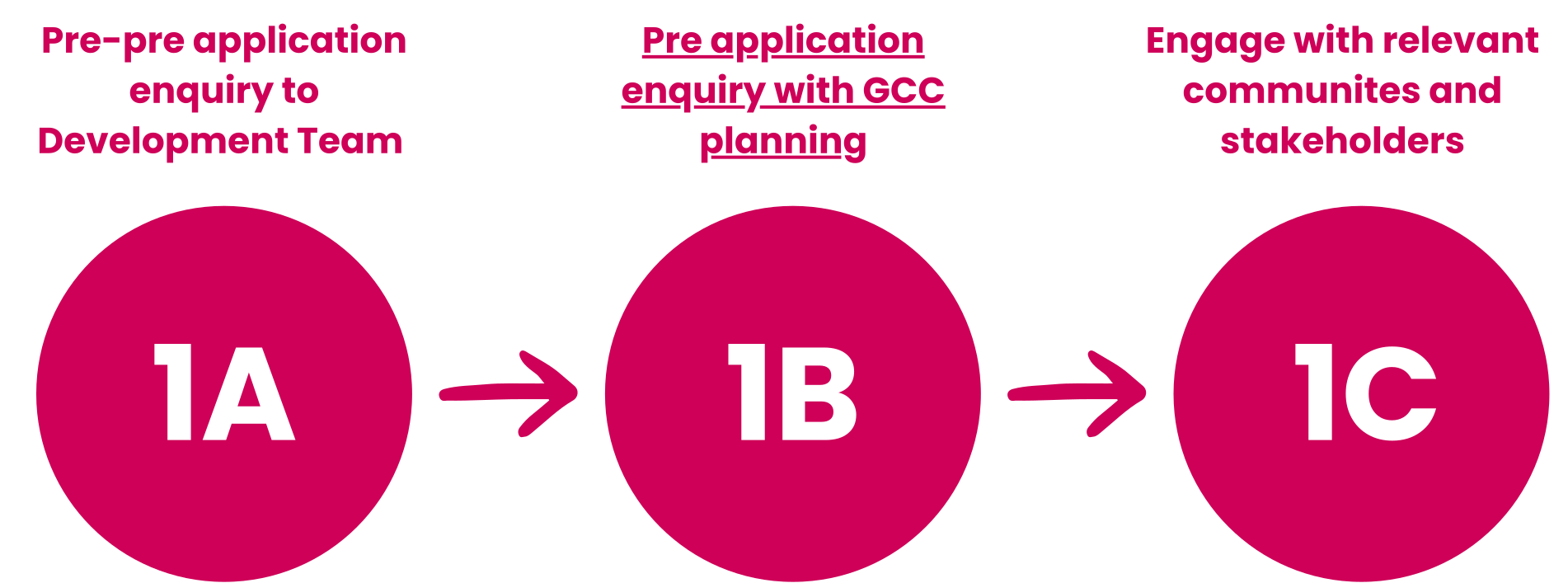
All national, regional and local plans are complimentary to one another. Developments in Glasgow must be compliant with all relevant plans.
Harnessing potential Key Planning Considerations
Housing supply and affordable housing
Glasgow’s Strategic Housing Investment Plan (SHIP) sets housing investment priorities for 2026/27–2030/31 and supports the aims of the Local Housing Strategy 2023–2028. Following the 2023 declaration of a housing emergency, the SHIP focuses on increa
Design quality
Great emphasis is placed on Place specific responses which add value to the visual and functional experience of the City for all. Design Quality is supported and enhanced by a multi layer framework of reference including NPF4 / Annex D – Six Qualitie
Open space
Glasgow’s parks and open spaces are a defining part of the city. Key areas of open space are protected through the Open Space Strategy, which guides how these places should be safeguarded and improved. In the city centre, the District Regeneration F
Preservation and enhancement of heritage
Central Glasgow is renowned for its rich architectural heritage, from its Victorian and Edwardian streetscapes to landmark buildings and historic urban fabric. Protecting this heritage is a key priority, so any development within or adjacent to Conse
Environmental sustainability and biodiversity net
Glasgow is committed to supporting Scotland’s net‑zero ambitions. Under NPF4, new development must help reduce carbon emissions, avoid worsening air quality, and incorporate urban greening and climate‑resilient design. Proposals are also expected to
Land value capture
In Glasgow, development must comply with requirements for affordable housing and developer contributions. These are set through the City Development Plan and implemented via Supplementary Guidance and IPG12, which establish how contributions toward
Working-up a Planning Application
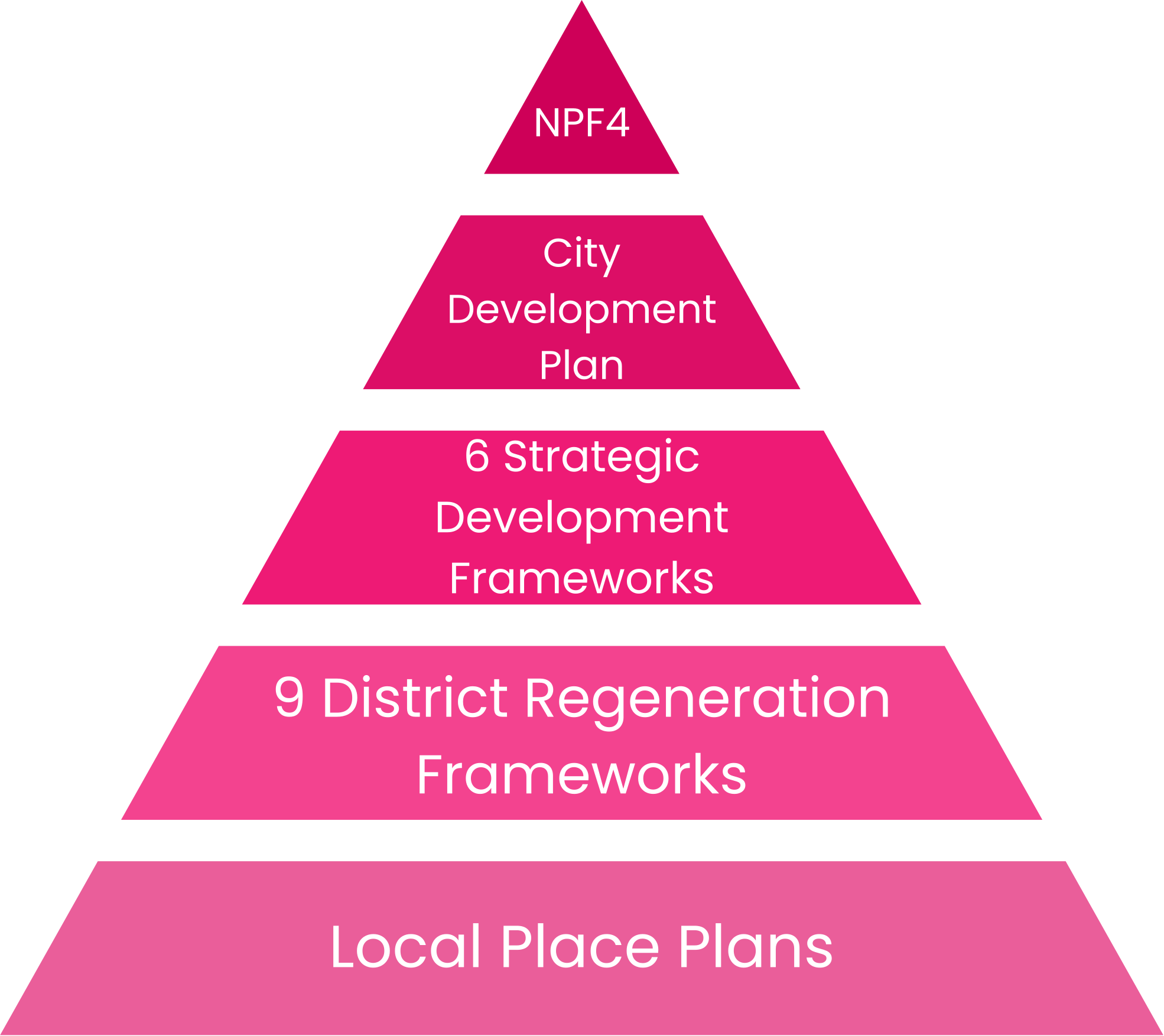
Pre-application activities
Before preparing a proposal, developers are encouraged to contact the Council’s development team for an informal discussion to understand key issues and expectations at an early stage.
Based on a design led approach in accordance with the current City Development Plan, the process encourages clients and design teams to engage in proactive pre-planning discussions.
It aims to ensure optimal resolution of key planning and design considerations before the formal application stage, hence de-risking process outcomes.
Experienced planning consultants, working with planning officers within pre-application consultations, can support applicants throughout these early stages.
It is good practice for developers of proposals to consider the benefit of participative design from the outset of the planning process by identifying and engaging the relevant stakeholders in the ecosystem of Place at an early stage.
For example, if a site is potentially at risk of flooding, developers should seek preapplication advice from SEPA, and if proposals involve works affecting utilities or public infrastructure, early engagement with the appropriate water, energy or transport providers is recommended.
Equally, early conversations with local communities and elected members are important to build local support and reduce the risk of objections later in the planning process.
Secure Planning Permission
Pre-application process
Once a proposal has been developed, a planning application is submitted to Glasgow City Council.
Applications are classified as local or major, depending on their scale. Major applications generally involve more statutory consultees, require more extensive environmental assessment, take longer to determine, and are more likely to go before the Planning Committee.
They also tend to attract greater political and public attention. For major schemes, the risks associated with objections can be reduced through early engagement, including informal contact with the development team and preapplication discussions.
Securing planning permission is a key milestone, after which an applicant may proceed to implement the consent or choose to dispose of the site.
Some forms of development in Scotland can also proceed under Permitted Development Rights, which allow certain changes of use or minor works to progress through a more streamlined process.
For further details about the planning process, please visit Glasgow City Council’s Planning Portal.
Additional guidance onthe Major Applications is also available, and a schematic overview of the full planning pathway can be found in the Tall Building Design Guide (see page 38).
1
Planning-Application Process
Most planning applications are determined by officers under delegated powers. However, decisions on applications are made in accordance with the Council’s scheme of delegation, meaning that some smaller or more sensitive proposals may be referred to the Planning Applications Committee, while certain major applications can be determined under delegated authority where appropriate. The Committee, made up of elected councillors, typically considers applications of greater significance or those raising particular issues of interest.
2
Planning Application Submission
Most planning applications are determined by officers under delegated powers. However, decisions on applications are made in accordance with the Council’s scheme of delegation, meaning that some smaller or more sensitive proposals may be referred to the Planning Applications Committee, while certain major applications can be determined under delegated authority where appropriate. The Committee, made up of elected councillors, typically considers applications of greater significance or those raising particular issues of interest.
3
Statutory Consultation
Most planning applications are determined by officers under delegated powers. However, decisions on applications are made in accordance with the Council’s scheme of delegation, meaning that some smaller or more sensitive proposals may be referred to the Planning Applications Committee, while certain major applications can be determined under delegated authority where appropriate. The Committee, made up of elected councillors, typically considers applications of greater significance or those raising particular issues of interest.
4
Planning Office Assessment & Recommendation
Most planning applications are determined by officers under delegated powers. However, decisions on applications are made in accordance with the Council’s scheme of delegation, meaning that some smaller or more sensitive proposals may be referred to the Planning Applications Committee, while certain major applications can be determined under delegated authority where appropriate. The Committee, made up of elected councillors, typically considers applications of greater significance or those raising particular issues of interest.
5
Application Decision
Most planning applications are determined by officers under delegated powers. However, decisions on applications are made in accordance with the Council’s scheme of delegation, meaning that some smaller or more sensitive proposals may be referred to the Planning Applications Committee, while certain major applications can be determined under delegated authority where appropriate. The Committee, made up of elected councillors, typically considers applications of greater significance or those raising particular issues of interest.
6
Discharge of Conditions Decision
Most planning applications are determined by officers under delegated powers. However, decisions on applications are made in accordance with the Council’s scheme of delegation, meaning that some smaller or more sensitive proposals may be referred to the Planning Applications Committee, while certain major applications can be determined under delegated authority where appropriate. The Committee, made up of elected councillors, typically considers applications of greater significance or those raising particular issues of interest.
Understanding your Planning Permission
Implementing your permission
Once planning permission has been secured, you will need to understand the requirements of the permission and any associated risks. Further consents may be required, e.g. building warrant.
If permission is refused, applicants may appeal to the Scottish Government’s Planning and Environmental Appeals Division (DPEA). Where the decision was delegated, applicants can also request a Local Review Body assessment by councillors.
There are key main considerations:
Developer contributions
Developer contributions are guided by the City Development Plan and implemented through Supplementary Guidance SG12.
Developer contributions are normally delivered through Section 75 (or Section 69) Legal Agreements tied to the planning consent .
Section 75 Agreements are also used to regulate aspects of the development.
Conditions
A planning permission will include a suite of conditions, including:
- basic compliance conditions
- the submission and approval of further information (for example suds and drainage, site investigations, design, etc)
During this stage the Planning service will ensure the continuous support of case officers to navigate the successful discharge of conditions.
To ensure this process is efficient and effective, significant post consent design changes are discouraged.
Delivery Routes
Most common routes to delivery
There are a number of established ways to bring a development project from concept to delivery.
The most suitable delivery route will depend on the partners involved, their expertise, their capacity, and their appetite for risk and reward.
As a result, bespoke partnership and delivery arrangements are common, with specialist advisors often helping to shape the governance, legal structures, and financial agreements that underpin a project.
Many of these tailored arrangements still fall broadly within a few familiar categories, such as public‑private partnerships, joint ventures, landowner‑developer agreements, or development‑led regeneration models used across the city.
Building the scheme - Delivery Options
Direct Delivery
Investors act as funders and development managers and are responsible for delivering the development, employing specialist contractors and advisors where required. The investor leads design and delivery, including the initial design work, securing planning permission, letting and monitoring build contracts, achieving practical completion, and finally implementing marketing and letting strategies..
Joint Venture
The project is delivered in partnership with others who contribute land or funding as equity. Partnerships often include developers, boroughs, or specialist providers such as housing associations, who deliver and manage affordable housing. Bespoke partnership arrangements govern the roles, responsibilities, and risk allocation of each organisation.
Buy and sell land
Sale of land, by tender or on the open market. At appropriate milestones (such as achieving planning permission), an investor could dispose of a development site to a party equipped to deliver development. Equally, many choose to acquire land with the benefit of a planning permission to reduce risk.
Funding-only
The investor is responsible for providing funding, while delivery is outsourced to a partner. This could be through a development agreement or a development management agreement, whereby other specialist parties take responsibility for the development and delivery of the scheme.
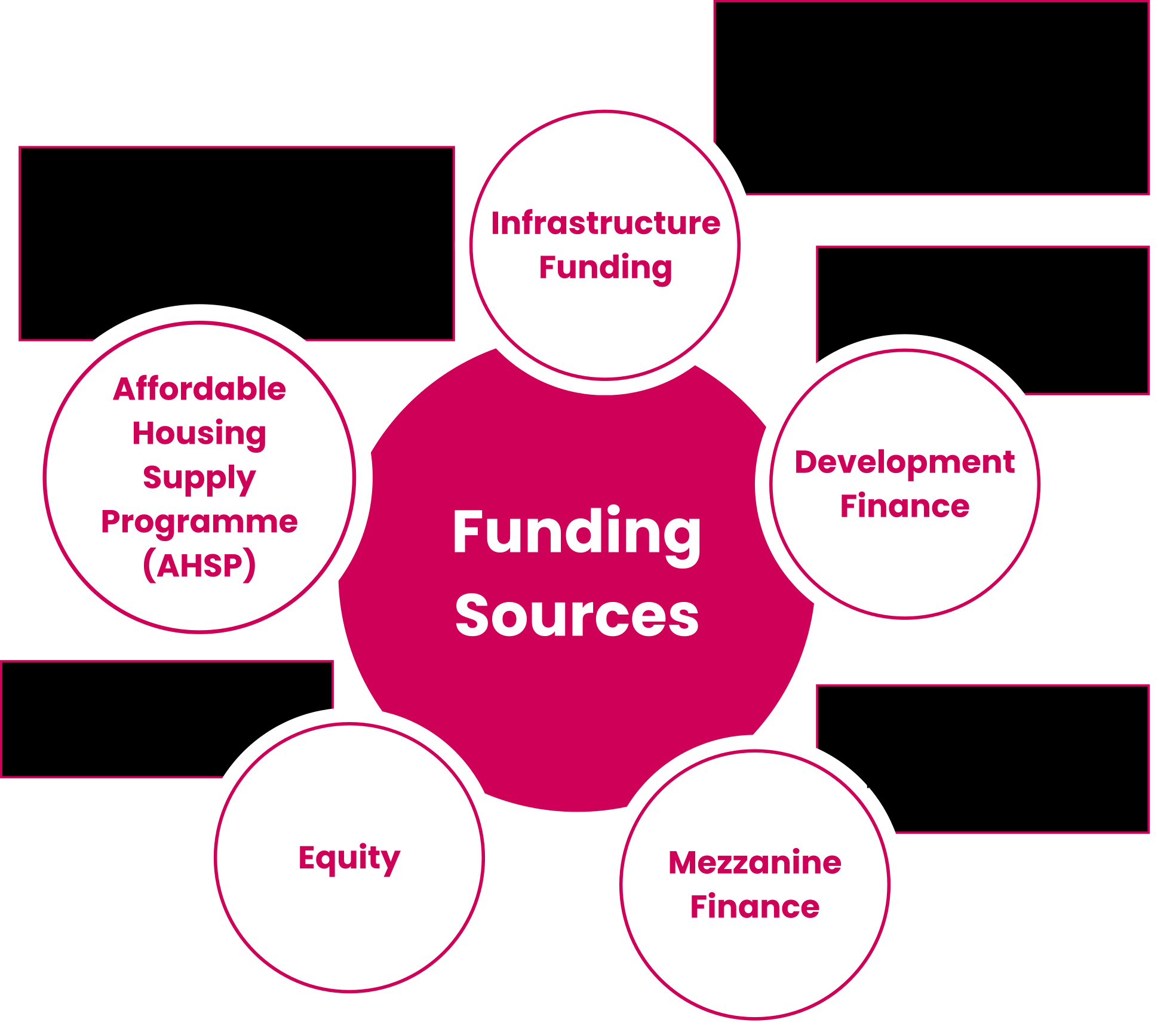
Funding and Finance Options
How to find and optimise project finance
Investors might be seeking to pull together a package of funding for a project (or projects); advisors will be able to support in identifying other appropriate sources of funding, though some of the key starting points are summarised below. Advisors can also support in refining development strategy to optimise a scheme’s viability and return to investors.
Given the range of tax, insurance, and currency exchange considerations, it’s worth selecting a panel of advisors across a range of different specialisms (tax, legal, development strategy, and so forth) to identify and manage areas of risk.

Project Management
Procuring contractors in Glasgow
Procurement of contractors will always be bespoke to a development site and the investor’s requirements, but there are three pathways commonly utilised by investors in the Glasgow development market.
Procurement routes will depend on project complexity, time constraints, budget, and client appetite for risk. An advisor can help with selecting a suitable procurement route.
Traditional (Design-bid-build)
This route involves separate design and construction teams reporting directly to the client.
Once the design team produces detailed project specifications, the project is put out to tender for contractors who bid based on the provided specifications. The client bears much of the design, construction and cost risk.
Design and Build (D&B)
There are various forms of D&B procurement, but typically the client procures a single contractor to undertake design and construction.
The contractor becomes your main point of communication, and they take on most of the delivery risk. However, the client manages design until the contractor is appointed. The contractor bears much of the design, construction and cost risk.
Construction Management
This method usually tenders out individual trade packages, enabling investors to directly appoint separate contractor and subcontractor teams.
A construction management team could be appointed to provide input on constructability and cost, particularly during the early design phase. The client bears much of the design, construction and cost risk, but will also reap any rewards.
Public Sector Partnerships
Public-private partnerships are an established and successful delivery route in Glasgow
In Glasgow, there are many examples of successful public‑private partnerships delivering complex, high‑quality developments. Choosing the right partner is critical and depends on a clear understanding of each party’s objectives, capabilities, and appetite for risk and reward. Public‑sector bodies must follow Scottish procurement regulations, and specialist advisors can support developers in identifying suitable partners and navigating the formal procurement process.
Investors can work with public‑sector organisations in several ways:
Project‑specific partnerships
These involve tailored agreements to deliver a defined development site. Risk and reward are shared through contractual arrangements, and in some cases by forming a dedicated joint entity. Land contributions, investment, and delivery responsibilities vary depending on the structure of the partnership.
Strategic partnerships
Some public bodies in Glasgow and across Scotland appoint long‑term strategic development partners to unlock investment at scale. These partnerships can create sustained opportunities for development, regeneration, and placemaking over multiple sites or phases.
Local and city‑centre partnerships
Within Glasgow, organisations such as Business Improvement Districts (BIDs) and area‑based regeneration initiatives often collaborate with investors to support development and manage the wider economic and place‑based benefits. There are also instances where multiple partners work collectively at a wider spatial level to align investment and coordinate delivery across districts.
